
 Tweet
Tweet
God told me to go to this site and share it with you all. I warn you it includes graphic depictions of the deplorable act of abortion. But it gets into the minds of those child murders.
-
-
Re: Get your Anti-Abortion signs here!!!!!
Yeah guys big government is awful. But being the government must be the arbitrator of morality influenced by christianity. Cause thats doesn't have anything to do with separation of church and state. -
Re: Get your Anti-Abortion signs here!!!!!
Separation of church and state is not in the Constitution.Originally posted by John Johnson View Post
Comment
-
Re: Get your Anti-Abortion signs here!!!!!
idk first amendment says gov't can't make laws respecting an establishment of religion.Originally posted by Heathen_Basher View Post
I guess your just talking out of your ass nowComment
-
Re: Get your Anti-Abortion signs here!!!!!
Originally posted by John Johnson View Post
home > q-wall > wal-g004.html
When did the U.S. government pass a law dictating the separation of church and state? Where can this law be found?


President George Washington in prayer. Learn more about this Founding Father
As the concept is commonly understood today, the government has never passed a law implementing the "separation of church and state." The First Amendment simply states:"Congress shall make no law respecting an establishment of religion, or prohibiting the free exercise thereof."Over the years, however, the Supreme Court and lower federal courts have reinterpreted this amendment in many ways. This reinterpretation of the Constitution has in effect become the “law” supposedly dictating the "separation of church and state."
 Let's look first at a very brief history of the Courts reasoning and rationale for reinterpretation, and then we'll discuss what the phrase "separation of church and state" means as it is applied in American public policy.One of the Supreme Court's most blatant violations of the Constitution came about through their reinterpretation of the Bill of Rights - the first ten amendments. Prior to this constitutional violation, the Bill of Rights applied only to the federal government. Notice the actual language of the First Amendment: "Congress shall make no law…"That was a very brief description of how the federal courts have taken authority over religious issues, reinterpreting the First Amendment and applying it to the States by way of the Fourteenth Amendment. All of this was done in clear violation of the actual wording of the Constitution, as well as the intentions of its framers. The modern concept of "separation of church and state" can not be justified using the historical record.
As one of many efforts to limit the power of the federal government, the Constitution left authority over religious matters to the States. The Supreme Court consistently adhered to this constitutional principle until well into the twentieth century.
But in the 1925 ruling, Gitlow v. New York, the Supreme Court began ignoring its predecessors and precedents. The Court reasoned that one of the purposes of the Fourteenth Amendment was to extend the Bill of Rights to the States. (This would obviously expand the powers of the federal courts to a great degree.) The history of the Fourteenth Amendment does not support their contention, nor do the earlier Courts.
Nonetheless, the 1925 Court ignored the historical record and the opinions of their predecessors, establishing a new precedent. Gitlow dealt with freedom of speech and the press; religious matters would soon follow.
In the context of religion, the Court's first and most abusive reinterpretation began in a 1940 Supreme Court ruling, Cantwell v. Connecticut. Here, the Court applied the "free exercise" clause of the First Amendment to the states. Again, religion was a State matter. State courts were, and are, completely capable of handling the issue. Nevertheless, the Supreme Court, in direct opposition to the original intentions of the Constitution, applied yet another portion of the Bill of Rights to the States. They did not stop there.
The next landmark ruling came down in 1947. In the case, Everson v. Board of Education, the Supreme Court applied the "establishment clause" of the First Amendment to the states. In the context of the "separation of church and state," the Court's foundational reinterpretation of the Constitution was complete. From 1947 forward, the Court has ruled with regularity on religious issues, in direct violation of the original meaning of the First Amendment. Their rulings, and those of lower courts (federal and State) have become the “law” of "separation of church and state."
We are forced, however, to work with the existing court doctrines. Therefore, what does the phrase mean today as it is applied in American public policy? The First Amendment, which prohibited any "law respecting the establishment of religion or prohibiting the free exercise thereof," has evolved into something entirely new. During the last generation, the courts, at all levels, have ruled in ways that essentially guarantee the freedom from religion, instead of the freedom of religion.
 "Separation of church and state," as applied to education, means that a prayer at a graduation ceremony is unconstitutional. It also means that students may not pause for a moment of silence at the beginning of their school day. It means that a nativity scene may not be displayed on public property unless there are other displays (e.g. Santa Clause or Christmas trees) that secularize the presentation.
Today's conception of "separation of church and state" has also been used to remove historic crosses from public property, and religious symbols from city seals. It has been used to remove the Ten Commandments from courtrooms, even though they are carved in stone within the architecture of the Supreme Court building. The concept has been used to prevent religious expressions on personalized license plates. And these are but a few of the official applications of the concept, or “law” of "separation of church and state."
One should understand that "separation of church and state" is not actually a law. It is a doctrine, or a legal concept, that has been implemented by the various courts primarily over the last fifty years. If this concept, as originally understood, would have been applied with consistency over the years, America would certainly be a different country right now. Religious expression would flourish, and the courts would not be micromanaging the religious life of the American people.
The doctrine of "separation of church and state" has been used, and is being used, to effectively purge religion from the public square. The historical perspective on church/state issues reveals a much different story. The government was to accommodate the religious communities; religion and religious expression were to be encouraged.
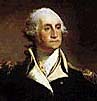 This is why, for example, the first Congress asked President George Washington to issue a Thanksgiving Proclamation upon completion of the Bill of Rights. Today, that practice would be viewed as unconstitutional. It would violate the "separation of church and state."
Recommended film
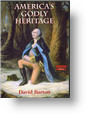 America’s Godly Heritage


by David Barton
Upon what principles was the USA founded? Was it founded as a Christian nation? What can we expect of a nation that now rejects the Founders beliefs? Features expert David Barton, with many eye-opening quotations and stories from Americas Founding Fathers.
[More Details] US$1999
Recommended for further reading
- What is the legal and moral role of the Bible and Christianity in the U.S.A.? Should God be separated from American government? Answer
- How important is it to be "Politically Correct?" Answer
- What is legally permissible for students in America's public schools? Answer
- Is the religion of Secular Humanism being taught in public school classrooms? Answer
- Where should Christians draw the line in trying to make the U.S. a Christian nation? Answer
- Should Christians seek political power, or should we only focus on evangelism? Answer
- David W. Barton, Original Intent: The Courts, The Constitution, and Religion (Wallbuilder Press, 1996).
[ If this information has been helpful, please prayerfully consider a donation to help pay the expenses for making this faith-building service available to you and your family! Donations are tax-deductible. ]
Author: Bill Suggs of WallBuilders. Photos provided for this article by Eden Communications.
Copyright © 1997, WallBuilders, Inc., All Rights Reserved - except as noted on attached “Usage and Copyright” page that grants ChristianAnswers.Net users generous rights for putting this page to work in their homes, personal witnessing, churches and schools.

www.ChristianAnswers.Net
Christian Answers Network
PO Box 200
Gilbert AZ 85299


 Christian Answers Network HOMEPAGE and DIRECTORY
See also:


http://www.afn.org/~govern/intent.html
Comment
-
Re: Get your Anti-Abortion signs here!!!!!
I'm not going to bother looking at all those sites; I can tell just from the title that their all biased. That would be like if I said 9/11 never happened and sourced a website like 9/11didn'thappen.comOriginally posted by Heathen_Basher View Post
If you make a decision based on religious influence then you are respecting an establishment of religion hence separation of church and state what don't you get
btw George Washington's religious affiliation is questionableComment
-
Re: Get your Anti-Abortion signs here!!!!!
http://www.allabouthistory.org/separ...-and-state.htm
http://www.expertlaw.com/library/mis...amendment.html
http://www.allacademic.com/meta/p_ml...852_index.html
http://www.afn.org/~govern/intent.html
Okay, these don't have religious titles, so your Christophobia need not prevent you from venturing in.
Separation of Church and State - The Metaphor and the Constitution
"Separation of church and state" is a common metaphor that is well recognized. Equally well recognized is the metaphorical meaning of the church staying out of the state's business and the state staying out of the church's business. Because of the very common usage of the "separation of church and state phrase," most people incorrectly think the phrase is in the constitution. The phrase "wall of separation between the church and the state" was originally coined by Thomas Jefferson in a letter to the Danbury Baptists on January 1, 1802. His purpose in this letter was to assuage the fears of the Danbury, Connecticut Baptists, and so he told them that this wall had been erected to protect them. The metaphor was used exclusively to keep the state out of the church's business, not to keep the church out of the state's business.
The constitution states, "Congress shall make no law respecting an establishment of religion, or prohibiting the free exercise thereof." Both the free exercise clause and the establishment clause place restrictions on the government concerning laws they pass or interfering with religion. No restrictions are placed on religions except perhaps that a religious denomination cannot become the state religion.
However, currently the implied common meaning and the use of the metaphor is strictly for the church staying out of the state's business. The opposite meaning essentially cannot in be found in the media, the judiciary, or in public debate and is not any part of the agenda of the ACLU or the judiciary.
This, in conjunction with several other factors, makes the "separation of church and state" metaphor an icon for eliminating anything having to do with Christian theism, the religion of our heritage, in the public arena. One of these factors is the use of the metaphor in place of the actual words of the constitution in discourse and debate. This allows the true meaning of the words in the constitution to be effectively changed to the implied meaning of the metaphor and the effect of the "free exercise" clause to be obviated. Another factor facilitating the icon to censor all forms of Christian theism in the public arena is a complete misunderstanding of the "establishment" clause.
Separation of Church and State - The Establishment Clause in Context
In addition to the "Separation of Church and State" metaphor misrepresenting the words of the establishment clause, the true meaning of the establishment clause is also misrepresented. The "establishment" clause states, "Congress shall make no law respecting an establishment of religion. . ." Before these words can be put in context and the true meaning of the clause can be correctly identified, we need to examine the word "religion" and put it in America's historical context at the time the constitution was framed. In addition, we need to examine the previous European historical background of the founders of our country to identify what specifically motivated them to place the "establishment" clause in the constitution.
To accomplish this, we need to add more specificity to the word "religion" to clarify both the American and European historical backgrounds and put the word "religion" in proper context. We need do delineate between doctrinal and denominational religion. We also need to understand that the doctrinal religion being discussed is Christian Theism, which is defined by a belief in the Bible. We know what specific Christian denominational religions are.
Separation of Church and State - Constitution Framers Historical Context
The "Separation of Church and State" metaphor blurs the distinction between a doctrinal religion and a denominational religion. This places the doctrinal religion we have embraced in the same basket as an organized denominational religion with potential to merge with the state. The documentary evidence of the doctrinal Christian religion origin of this nation is voluminous. The Supreme Court thoroughly studied this issue, and in 1892 gave what is known as the Trinity Decision. In that decision the Supreme Court declared, "this is a Christian nation." John Quincy Adams said, "The highest glory of the American Revolution was, it connected in one indissoluble bond, the principles of civil government with the principles of Christianity." The founders were definitely Christian for the most part. At least 90 to 95 percentage of them were practicing, Trinitarian Christians. This and the additional supporting evidence below show conclusively that the concern that motivated the framers to include the establishment clause in the constitution was definitely not fear of the doctrinal religion of Christian Theism. It was understood that Christian Theism was the default state doctrinal religion. As opposed to being something to fear, it was something believed to be vital to the success of our government. Consequently, the framers feared a state denominational religion not a state doctrinal religion! Some additional evidences that indicate Christian Theism was the national doctrinal religion are listed below: Emblazoned over the Speaker of the House in the US Capitol are the words "In God We Trust."
The Supreme Court building built in the 1930's has carvings of Moses and the Ten Commandments.
God is mentioned in stone all over Washington D.C., on its monuments and buildings.
As a nation, we have celebrated Christmas to commemorate the Savior's birth for centuries.
Oaths in courtrooms have invoked God from the beginning.
The founding fathers often quoted the Bible in their writings.
Every president that has given an inaugural address has mentioned God in that speech.
Prayers have been said at the swearing in of each president.
Each president was sworn in on the Bible, saying the words, "So help me God."
Our national anthem mentions God.
The liberty bell has a Bible verse engraved on it.
The original constitution of all 50 states mentions God.
Chaplains have been in the public payroll from the very beginning.
Our nations birth certificate, the Declaration of Independence, mentions God four times.
The Bible was used as a textbook in the schools.
Read Separation Of Church And State Page 2 Now!
George Washington's religion:
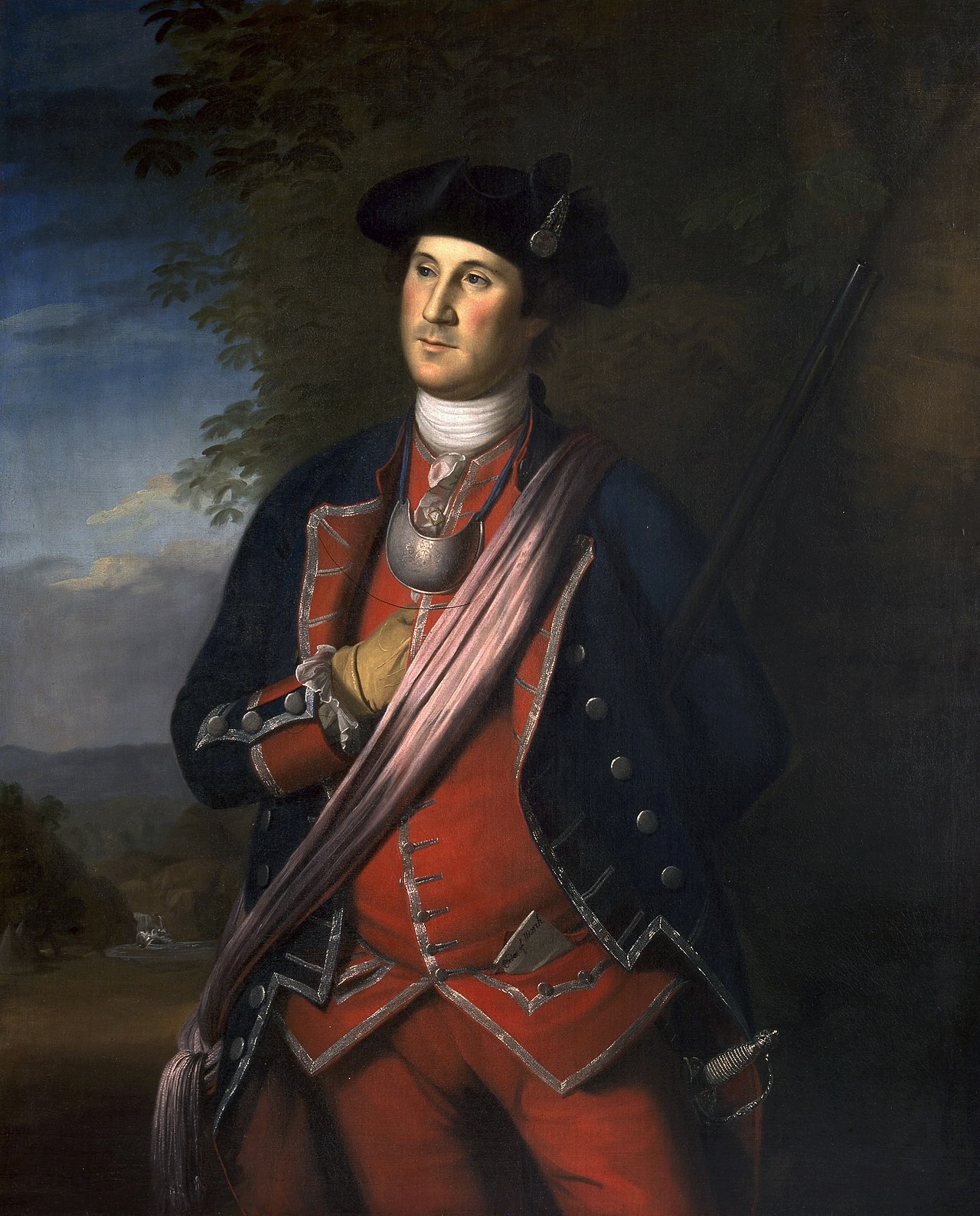
"Unlike some of his fellow Founding Fathers, such as Thomas Jefferson, Benjamin Franklin, and Patrick Henry, Washington rarely discussed or wrote about his religious and philosophical opinions in any great detail yet he frequently displayed a humble and gracious respect towards God in his personal letters and public speeches."
"As an adult, Washington served as a member of the vestry (lay council) for his local parish."
"Washington regularly attended Sunday services and purchased a family pew at several churches."
"Washington was buried according to the rite of the Episcopal Church, with the Rev. Thomas Davis, rector of Christ Church, Alexandria, officiating.[17]"
"His adopted daughter, Nelly Custis-Lewis, in response to a request from Jared Sparks in 1833 for information on Washington's religions views, wrote, "He attended the church at Alexandria when the weather and roads permitted a ride of ten miles (a one-way journey of 2-3 hours by horse or carriage). In New York and Philadelphia he never omitted attendance at church in the morning, unless detained by indisposition [sickness]." She continues by saying "No one in church attended to the services with more reverential respect." She adds: "I should have thought it the greatest heresy to doubt his firm belief in Christianity. His life, his writings, prove that he was a Christian. He was not one of those who act or pray, that they may be seen of men."[9]"
"Throughout his life, he spoke of the value of righteousness, and of seeking and offering thanks for the "blessings of Heaven""
"Washington was an officer in the Freemasons, an organization which, at the time Washington lived, required that its members "will never be a stupid Atheist nor an irreligious Libertine",[33] which meant that they should believe in God, regardless of other religious convictions or affiliations.[34][35]"
"Paul F. Boller, Jr. stated "Washington was no infidel, if by infidel is meant unbeliever."
"The book, George Washington's Sacred Fire, concluded that Washington was an orthodox Christian within the framework of his time."
"What we did prove, and quite conclusively, is that Washington cannot be called a Deist—at least, not in a sense that excludes his being Christian. Although he did most often address God in the proper names a Deist might use—such as "Author of all the good that was, that is, or that will be" and "Disposer of all human events"—the actions that Washington expected God to perform, as expressed both in his official public prayers (whether as general or as president) and in his private prayers as recorded, are the sorts of actions only the God of the Bible performs: interposing his actions in human events, forgiving sins, enlightening minds, bringing good harvests, intervening on behalf of one party in a struggle between good and evil (in this case, between liberty and the deprivation of liberty), etc. Many persons at the end of the 18th century were both Christians and Deists. But it cannot be said, in the simpleminded sense in which historians have become accustomed to putting it, that Washington was merely a Deist, or even that the God to whom he prayed was expected to behave like a Deist God at all.[40]"
Comment
-
Re: Get your Anti-Abortion signs here!!!!!
Okay I'm not going to waste my time arguing whether George was a christian or not and even if he was then so what?Originally posted by Heathen_Basher View Post
This is extremely simple: 1st amendment: gov't can't make laws respecting religious establishments:translated for dumbass: gov't can't make laws influenced by religion: translated for dumbass: separation of church and state.
You can source pages you prob haven't even read and you don't know anything about but it is very simpleComment
-
Re: Get your Anti-Abortion signs here!!!!!
Actually it says:
"Congress shall make no law respecting an establishment of religion, or prohibiting the free exercise thereof"
Translated for you, (keeping in mind respecting is used in the 18th century sense to mean "in relation to", not the modern sense "showing reverence for",) It say Congress will not make a law that establishes a religion.
Am I asking Congress to form a "Church of America". No. Do you know the historical context of the constitution at all? They had escaped Europe, and mainly England, where there was the "Church of England". It was supposedly a church, but it was controlled by the government. The government was using the authority of the church to be tyrannical to the people.
In America, they wanted to protect their churches from interference from the government. They did not want to keep churches from influencing the government, which is why it goes on to say, "or prohibiting the free exercise thereof." They made a point to say that the church would be 100% free, and that means freedom to pass laws that support their beliefs. The comments of the majority of the founding fathers would make this interpretation clear.Comment
-
Re: Get your Anti-Abortion signs here!!!!!
"Congress shall make no law respecting an establishment of religion, or prohibiting the free exercise thereof"Originally posted by Heathen_Basher View Post
They made a point to say that the church would be 100% free, and that means freedom to pass laws that support their beliefs.
That doesn't make any senseComment
-
Re: Get your Anti-Abortion signs here!!!!!
Tell that to Bill Clinton. He agrees with meOriginally posted by John Johnson View Post
Comment
-
Re: Get your Anti-Abortion signs here!!!!!
Why bother saving them when years down the line you lot will just condem them all to hell anyway?Originally posted by cosmo billy View Post
Comment
-
Re: Get your Anti-Abortion signs here!!!!!
America. Land of the free and the brave. And that's the freedom to have an abortion despite all your objections.
Is it a child? Who cares, it's never bothered Christians before.Comment
-
Re: Get your Anti-Abortion signs here!!!!!
"Anti-Abortion"? Why not "Pro-Life"? (much more positive-sounding-AND much more marketable)ACTS 5:29
There you have it-so WHAT'S STOPPING YOU COWARDS?But Peter and the apostles said in reply, "We must obey God rather than men."
Comment
-
Re: Get your Anti-Abortion signs here!!!!!
Pro-Life is too ambiguous. We don't want people to think we are against the death penalty or something like that.Comment




Comment