
 Tweet
Tweet
Soon after the Nye-Ham debate, Answers in Genesis posted this video response to Nye's claim that the Bible came to us like a game of telephone.
These two young ladies enthusiastically tell us why they think the Bible is reliable. There are 5,366 ancient New Testament manuscripts and they are 98.3% in agreement.
This figure, for which I cannot find a reliable source, is widely quoted on the internet among false Christians, and it is plainly untrue. There are over 5,300 ancient New Testament manuscripts, but they vary in around 200,000 places. The book of Acts contains the most textual variants, with Western texts being 10% longer than Alexandrian texts. One of the women in the video tries to convince us that these are merely spelling and punctuation mistakes and nothing that affects doctrine. While many of the variations are due to spelling, none are due to punctuation -- for the simple reason that early Greek didn't have any punctuation! There were no spaces between words and no distinction between upper- and lowercase letters.
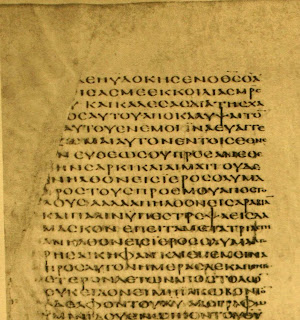
Sometimes even spelling mistakes affect the meaning of a passage; for example, Luke 2:14 --
ἐπὶ γῆς εἰρήνη ἐν ἀνθρώποις εὐδοκίας (on earth peace to men of good will)
ἐπὶ γῆς εἰρήνη ἐν ἀνθρώποις εὐδοκία (on earth peace, good will toward men)
(Whenever quoting Greek manuscripts, you use ^this kind^ of Greek with punctuation to make it easier to read.)
The alteration of a single numeral can also affect meaning. For example, is the Number of the Beast 666 (χξς), or 616 (χις) as the oldest manuscript of Revelation reads?
Many textual variations do affect doctrine. Sometimes entire phrases or passages have been added or omitted. The doctrine of election is affected by the addition or omission of the last half of this verse:
Mat 20:16 So the last shall be first, and the first last: for many be called, but few chosen.
The doctrine of the incarnation is affected by the addition or omission of a noun clause (underlined) in this verse:
1 Jn 4:3 And every spirit that confesseth not that Jesus Christ is come in the flesh is not of God: and this is that spirit of antichrist, whereof ye have heard that it should come; and even now already is it in the world.
The doctrine of the Trinity is affected by the addition or omission of this passage (underlined):
1 Jn 5:7-8 For there are three that bear record in heaven, the Father, the Word, and the Holy Ghost: and these three are one. And there are three that bear witness in earth, the Spirit, and the water, and the blood: and these three agree in one.
These are just a few examples from the New Testament. There are even textual variants in the Old Testament that significantly affect the meaning of a passage. The ladies in the video mention fulfilled prophecy as proof of the Bible's reliability, and I agree it is. The hairs on the back of my neck stand up every time I read Isaiah 53:2b.
Is 53:2b [H]e hath no form nor comeliness; and when we shall see him, there is no beauty that we should desire him.
800 years before Jesus was born, the Prophet Isaiah predicted that the Messiah would have average looks, and although the Gospels give no physical description of Jesus, we know that this prophecy was fulfilled! What are the odds that Isaiah could have just guessed there would be an average-looking person in the future? Yet there are some textual variants that affect messianic prophecy. For example, does Psalm 22:16, one of the fulfilled prophecies mentioned in the video, read "they pierced my hands and my feet" or "like a lion, my hands and feet"? Not only does the latter reading undermine prophecy; it makes it look like God's Word doesn't make any sense.
The ladies in the video go on to boast of 25,000 archaeological finds that confirm the existence of people and places mentioned in the Bible. They neglect to mention the finds that contradict the Bible. As I said in another thread, you can't trust secular archaeology.
But after they effectively demolish the accuracy and reliability of God's Word, they end the video with God's promise to preserve His Word.
Ps 12:6-7 The words of the Lord are pure words: as silver tried in a furnace of earth, purified seven times. Thou shalt keep them, O Lord, thou shalt preserve them from this generation for ever.
Mk 13:31 Heaven and earth will pass away, but my words will never pass away.
God can preserve His Word, and He has! It is the King James Bible, the only version that can claim to be 100% accurate. It is based on the Textus Receptus, the most reliable New Testament text, compiled from reliable late Greek manuscripts, not corrupted older manuscripts. It agrees perfectly with the texts that agree with it. Of course, there are different versions of the KJV and the Textus Receptus, but the 1611 KJV is the only uncorrupted version of the KJV and the version of the Textus Receptus the KJV was based on is the only uncorrupted version of the Textus Receptus.
The KJV is the complete Word of God. Other (mis)translations, like the Notoriously Inaccurate Version, omit words, phrases and entire verses.
The KJV did not come to us like a game of telephone. It is the perfectly-preserved Word of God.
These two young ladies enthusiastically tell us why they think the Bible is reliable. There are 5,366 ancient New Testament manuscripts and they are 98.3% in agreement.
This figure, for which I cannot find a reliable source, is widely quoted on the internet among false Christians, and it is plainly untrue. There are over 5,300 ancient New Testament manuscripts, but they vary in around 200,000 places. The book of Acts contains the most textual variants, with Western texts being 10% longer than Alexandrian texts. One of the women in the video tries to convince us that these are merely spelling and punctuation mistakes and nothing that affects doctrine. While many of the variations are due to spelling, none are due to punctuation -- for the simple reason that early Greek didn't have any punctuation! There were no spaces between words and no distinction between upper- and lowercase letters.
Sometimes even spelling mistakes affect the meaning of a passage; for example, Luke 2:14 --
ἐπὶ γῆς εἰρήνη ἐν ἀνθρώποις εὐδοκίας (on earth peace to men of good will)
ἐπὶ γῆς εἰρήνη ἐν ἀνθρώποις εὐδοκία (on earth peace, good will toward men)
(Whenever quoting Greek manuscripts, you use ^this kind^ of Greek with punctuation to make it easier to read.)
The alteration of a single numeral can also affect meaning. For example, is the Number of the Beast 666 (χξς), or 616 (χις) as the oldest manuscript of Revelation reads?
Many textual variations do affect doctrine. Sometimes entire phrases or passages have been added or omitted. The doctrine of election is affected by the addition or omission of the last half of this verse:
Mat 20:16 So the last shall be first, and the first last: for many be called, but few chosen.
The doctrine of the incarnation is affected by the addition or omission of a noun clause (underlined) in this verse:
1 Jn 4:3 And every spirit that confesseth not that Jesus Christ is come in the flesh is not of God: and this is that spirit of antichrist, whereof ye have heard that it should come; and even now already is it in the world.
The doctrine of the Trinity is affected by the addition or omission of this passage (underlined):
1 Jn 5:7-8 For there are three that bear record in heaven, the Father, the Word, and the Holy Ghost: and these three are one. And there are three that bear witness in earth, the Spirit, and the water, and the blood: and these three agree in one.
These are just a few examples from the New Testament. There are even textual variants in the Old Testament that significantly affect the meaning of a passage. The ladies in the video mention fulfilled prophecy as proof of the Bible's reliability, and I agree it is. The hairs on the back of my neck stand up every time I read Isaiah 53:2b.
Is 53:2b [H]e hath no form nor comeliness; and when we shall see him, there is no beauty that we should desire him.
800 years before Jesus was born, the Prophet Isaiah predicted that the Messiah would have average looks, and although the Gospels give no physical description of Jesus, we know that this prophecy was fulfilled! What are the odds that Isaiah could have just guessed there would be an average-looking person in the future? Yet there are some textual variants that affect messianic prophecy. For example, does Psalm 22:16, one of the fulfilled prophecies mentioned in the video, read "they pierced my hands and my feet" or "like a lion, my hands and feet"? Not only does the latter reading undermine prophecy; it makes it look like God's Word doesn't make any sense.
The ladies in the video go on to boast of 25,000 archaeological finds that confirm the existence of people and places mentioned in the Bible. They neglect to mention the finds that contradict the Bible. As I said in another thread, you can't trust secular archaeology.
But after they effectively demolish the accuracy and reliability of God's Word, they end the video with God's promise to preserve His Word.
Ps 12:6-7 The words of the Lord are pure words: as silver tried in a furnace of earth, purified seven times. Thou shalt keep them, O Lord, thou shalt preserve them from this generation for ever.
Mk 13:31 Heaven and earth will pass away, but my words will never pass away.
God can preserve His Word, and He has! It is the King James Bible, the only version that can claim to be 100% accurate. It is based on the Textus Receptus, the most reliable New Testament text, compiled from reliable late Greek manuscripts, not corrupted older manuscripts. It agrees perfectly with the texts that agree with it. Of course, there are different versions of the KJV and the Textus Receptus, but the 1611 KJV is the only uncorrupted version of the KJV and the version of the Textus Receptus the KJV was based on is the only uncorrupted version of the Textus Receptus.
The KJV is the complete Word of God. Other (mis)translations, like the Notoriously Inaccurate Version, omit words, phrases and entire verses.
The KJV did not come to us like a game of telephone. It is the perfectly-preserved Word of God.

 We are so lucky to have the only inerrant Word of God in KJV.




 belongs to God, and tis Grace, beautiful grace that led a Calvinist to write the Hymn - John Newton
Comment